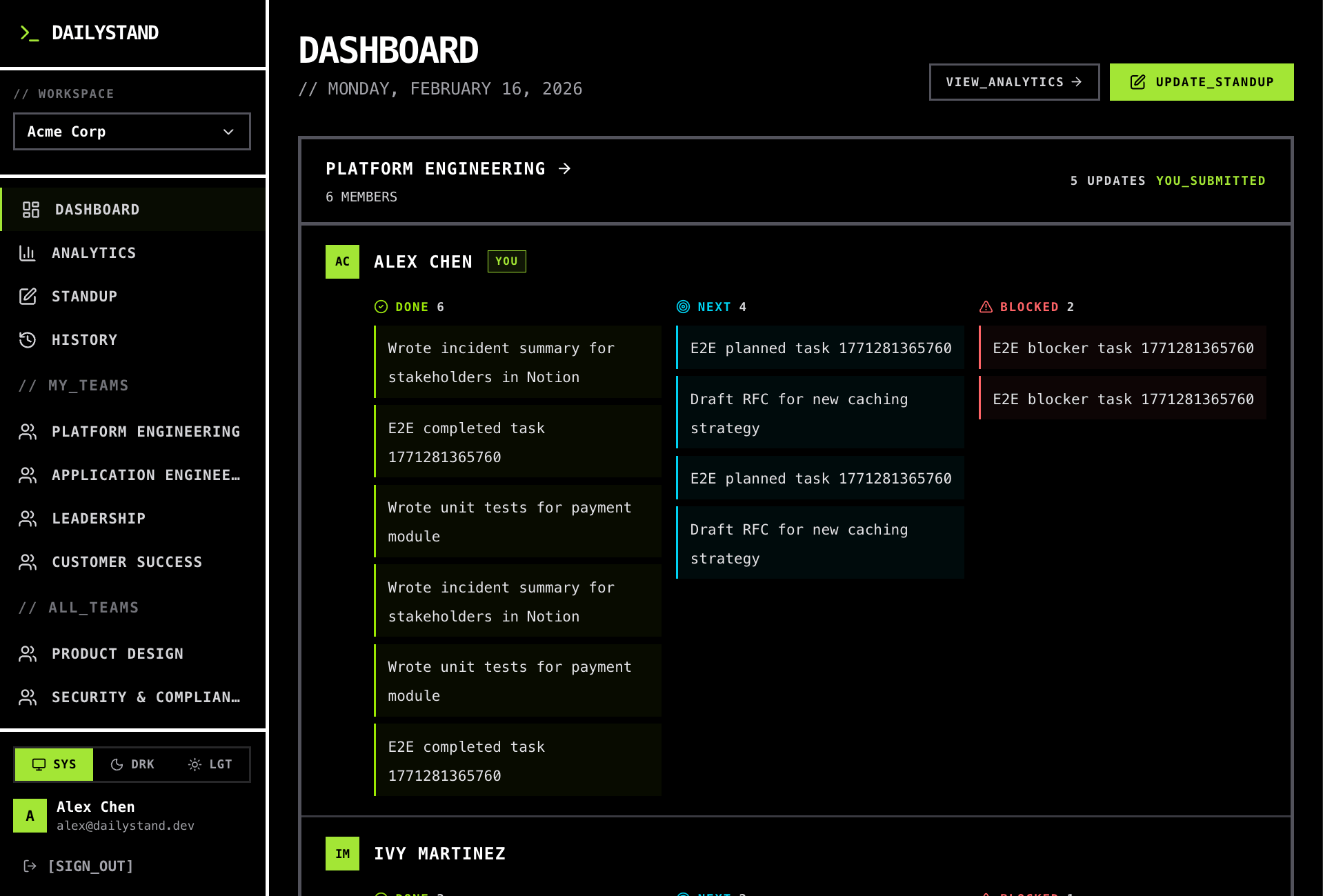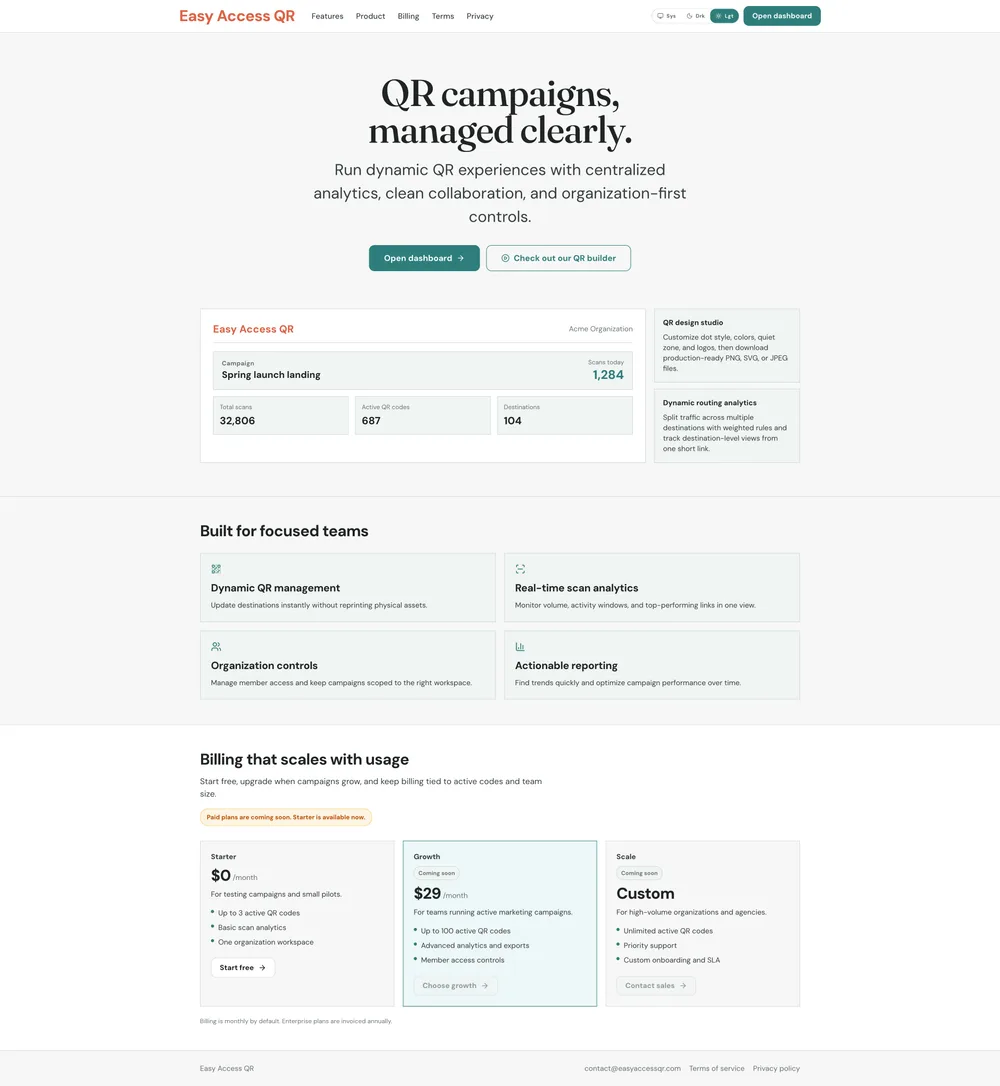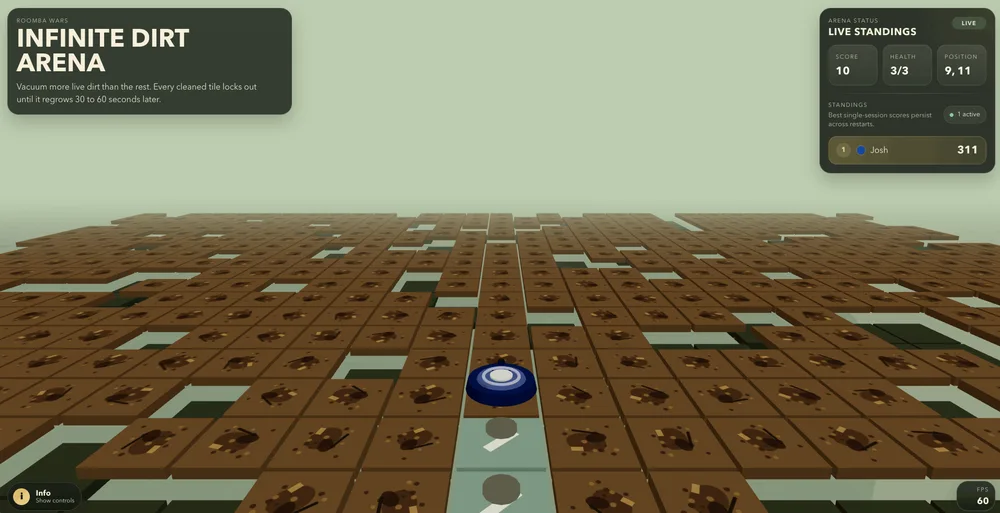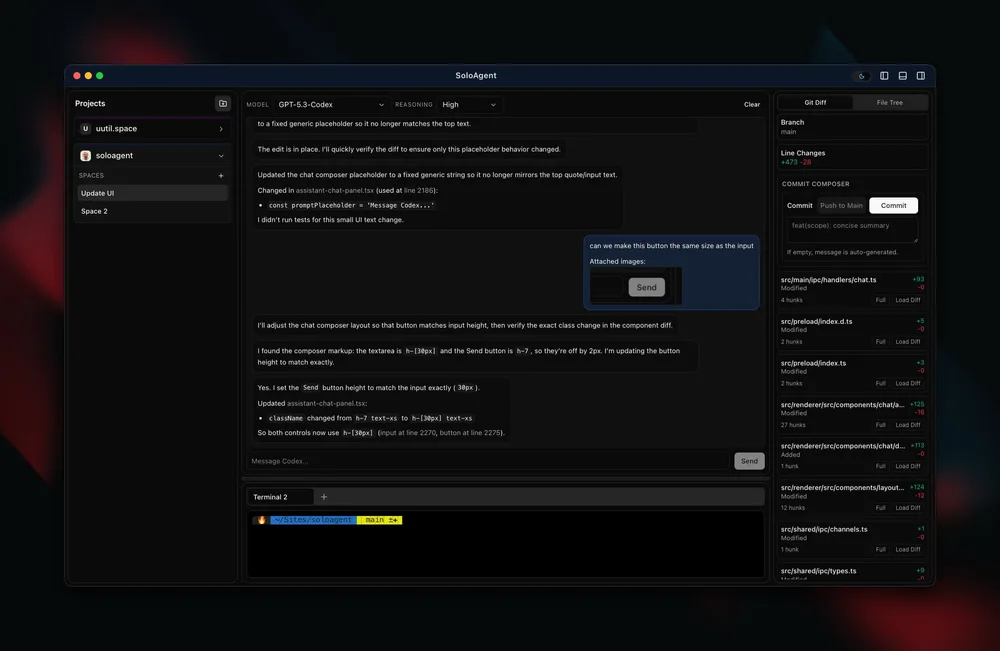
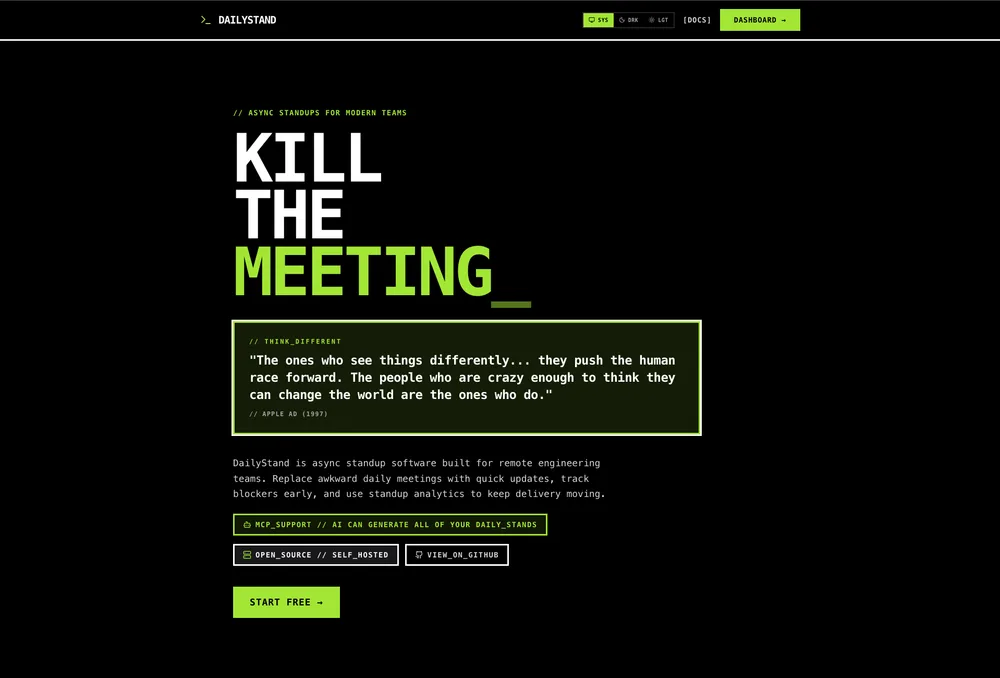
I set out to build a simple async standup app.
By the end of the day, it had organizations, teams, members, analytics, API keys, public API + MCP support, Stripe billing hooks, Sentry monitoring, PostHog analytics, and a public repo.
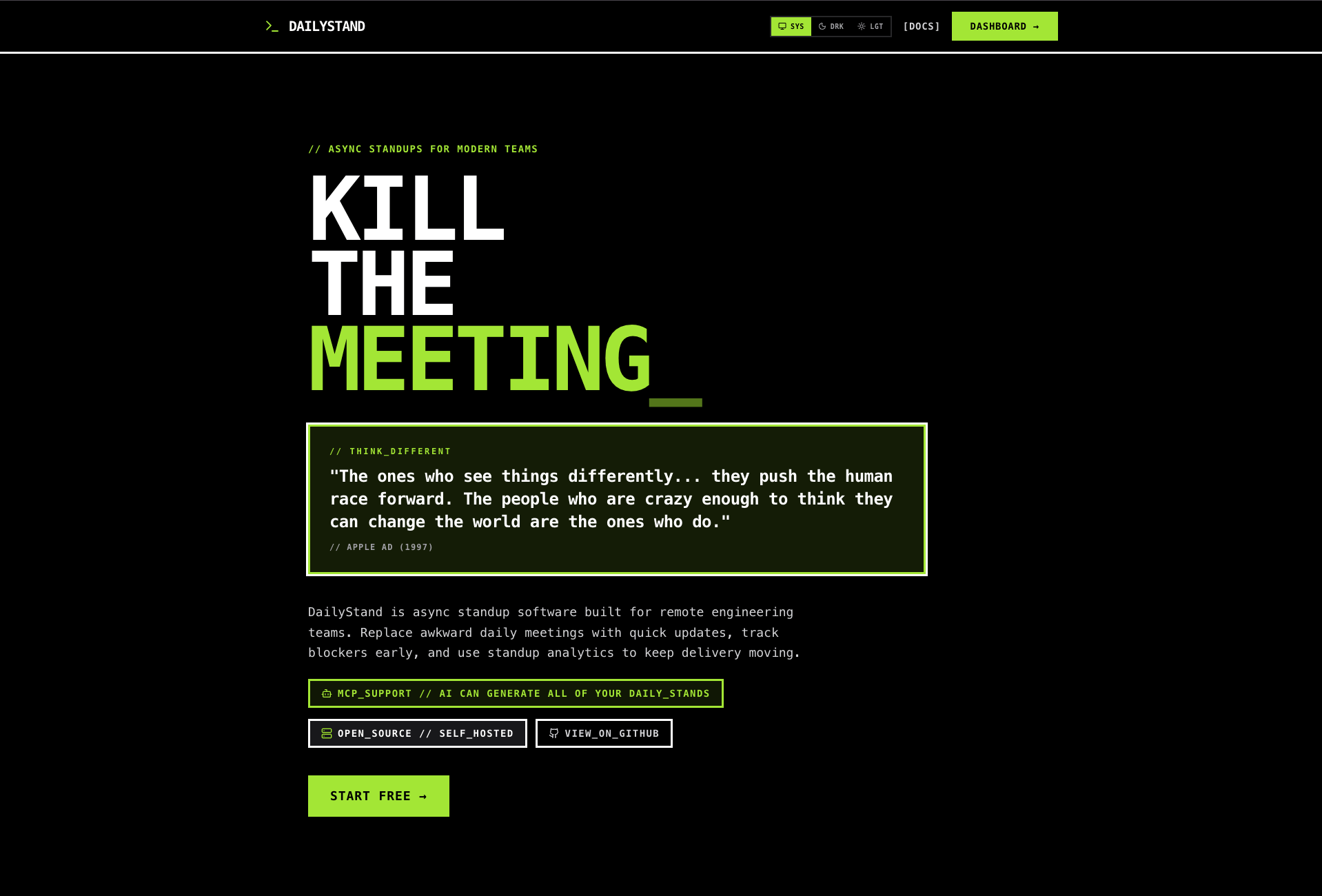
That project became dailystand.dev and I open-sourced it at github.com/nearbycoder/dailystand.dev.
I wanted to ship a real product, not a toy
The decision that made the biggest difference was defining the bar before I wrote code.
I did not want “standups for one team in local dev.” I wanted something a company could actually use:
- multiple organizations
- teams and member roles
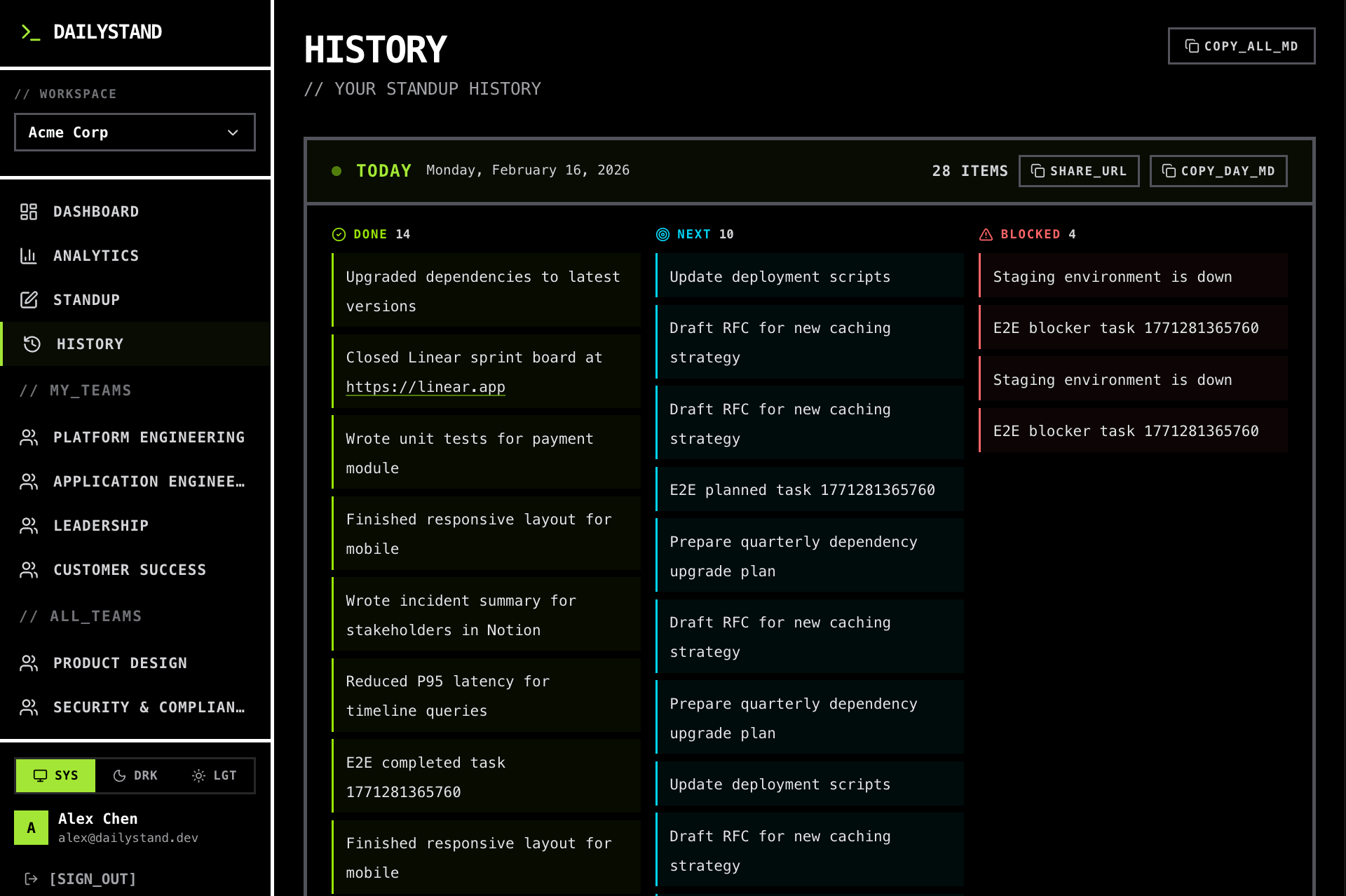
- daily submissions and history
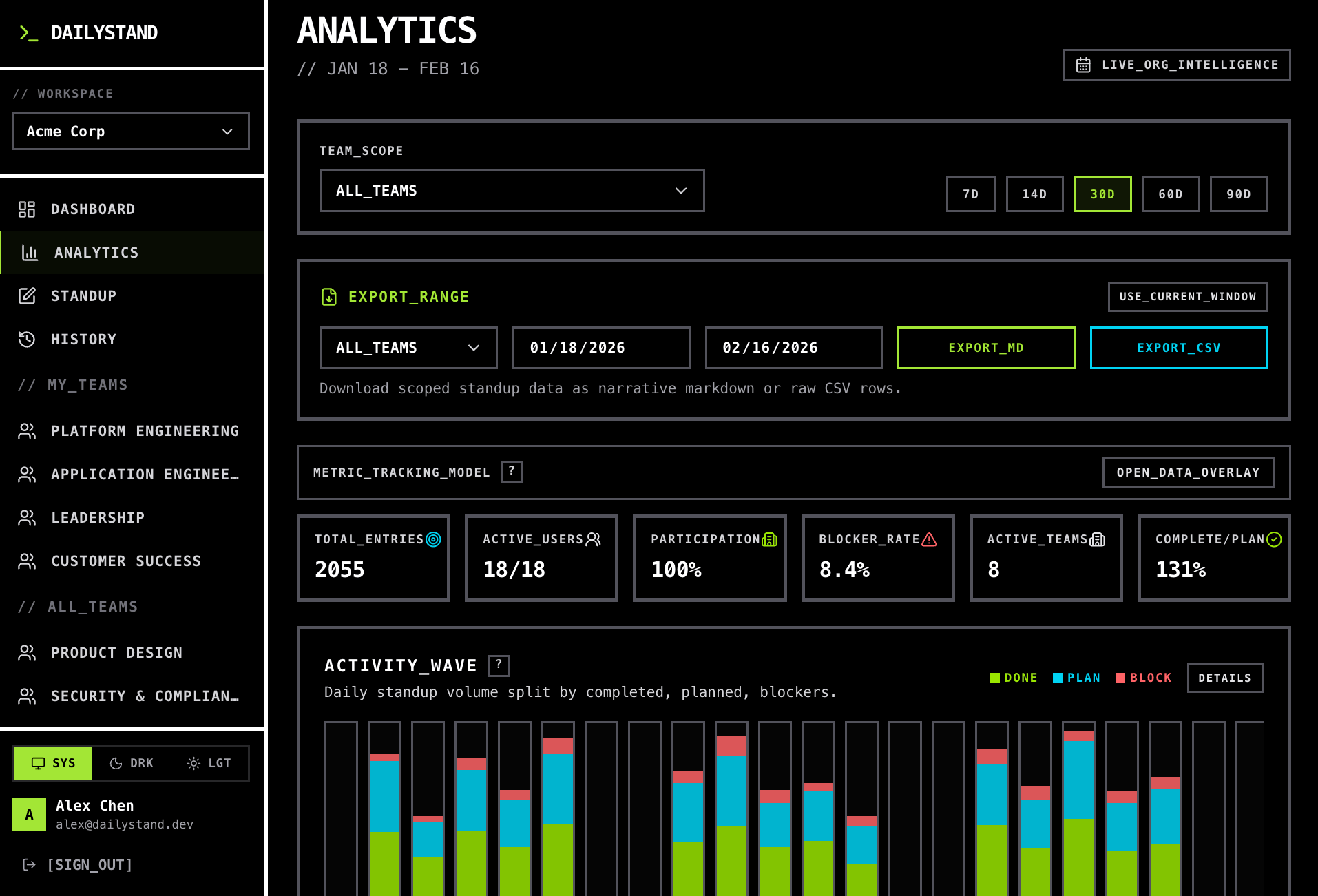
- analytics that answer real questions
- production hooks for billing and observability
Once that scope was clear, every technical decision got easier. I could reject anything that did not move those outcomes forward.
The build sprint
I used Claude and Codex as a pair, but not in a vague “AI built it” way.
Claude was best for shaping product and architecture decisions quickly: edge cases, permission models, and flow design.
Codex was best for high-velocity execution in-repo: implementing routes, data plumbing, component updates, and cleanup.
That combo helped me stay in one loop all day:
- decide the behavior
- implement the slice
- test the path
- move to the next high-value piece
What “fully featured in a day” actually looked like
The most important part was finishing the hard middle, not just shipping UI.
Organizations, teams, and members forced me to get access boundaries right.
Sentry went in early so failures were visible while features were still moving.
Stripe support was wired because plans and limits affect both product and data model.
PostHog was included so I could measure usage immediately instead of retrofitting events later.
By the time the core UX felt good, the product already had operational scaffolding.
That is what made the pace feel different from past projects. I was not deferring “real world” work to later.
Open source from day zero
Publishing the code right away changed how I built.
When you know people can read every file, you naturally tighten structure, docs, naming, and setup steps. It forces cleaner defaults. It also makes iteration easier because feedback arrives from both users and builders.
If you want to browse the code or run it yourself:
- Site: dailystand.dev
- Repo: nearbycoder/dailystand.dev
The real takeaway
The win was not “typing less.” The win was compressing the distance between intent and shippable software.
AI tools did not replace product judgment. They amplified it. I still made the calls on architecture, tradeoffs, and quality. But instead of burning hours on glue work, I spent those hours on the parts that matter most.
Shipping DailyStand in less than a day made one thing obvious: with the right loop, it is now realistic to build and launch a serious SaaS much faster than most of us were trained to expect.