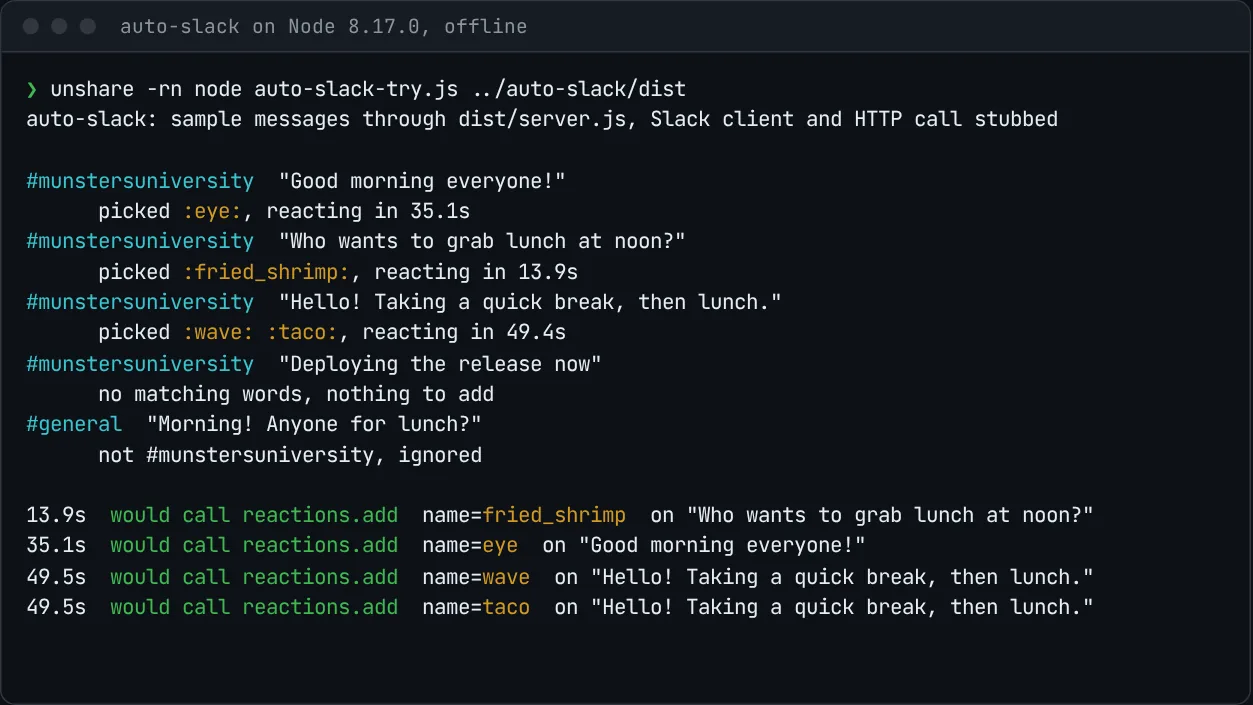
auto-slack watches one Slack channel, #munstersuniversity, and adds emoji reactions to messages there. A message with the word “morning” or “hello” gets one emoji picked at random from seven: wave, coffee, zzz, sleeping, point_up, eye and spock-hand. “Lunch” or “break” gets one of fourteen foods, from pizza and tacos to ramen and ice cream, and a message can get one of each. The bot waits a random time of up to a minute before it reacts, and it never posts messages of its own.
It was written in ten commits between June and September 2017 and hasn’t changed since. There’s no README. A sample.env file lists the one setting it needs, the bot’s API_TOKEN.

How it changed
The first version reacted with wave to greetings and pizza to lunch. It found words by splitting the message on spaces, so its matchers also had to list “morning!” and “hello!”. In July a commit added the random delay. In September the words were matched with a regular expression instead, each set of matchers got a list of emoji to pick from, and “break” moved from the greetings to the food.
How it’s built
It’s ES2015 JavaScript with stage-0 features, compiled by Babel 6 into dist/ when the package installs. The slackbots library connects to Slack’s real-time messaging API and loads the channel and user lists at startup. Reactions go straight to Slack’s reactions.add method through node-fetch, and a Procfile runs the compiled server under forever.
The package and its EmojiParser class have the same structure as Afterhours Bot, which was started five days earlier. package.json still lists that bot’s Express and Yahoo YQL dependencies, though auto-slack doesn’t use them.
The creation date shown here is the GitHub repository’s UTC creation date. The terminal capture comes from running the repository’s compiled code locally on Node 8 with sample messages and stubs in place of Slack, and the code card is rendered from its source.