GraphQL Store is an online store in two repositories: a Rails API that speaks GraphQL, graphql_store_server, and a React storefront, graphql_store_client, that talks to it through Apollo Client. Both were written between December 17 and 23, 2017, and neither has changed since.
The screenshots on this page come from the client running locally. The Rails server wasn’t run for them. Instead, a small local stub, written from the server’s GraphQL schema, answered the client’s queries with made-up products.
The storefront
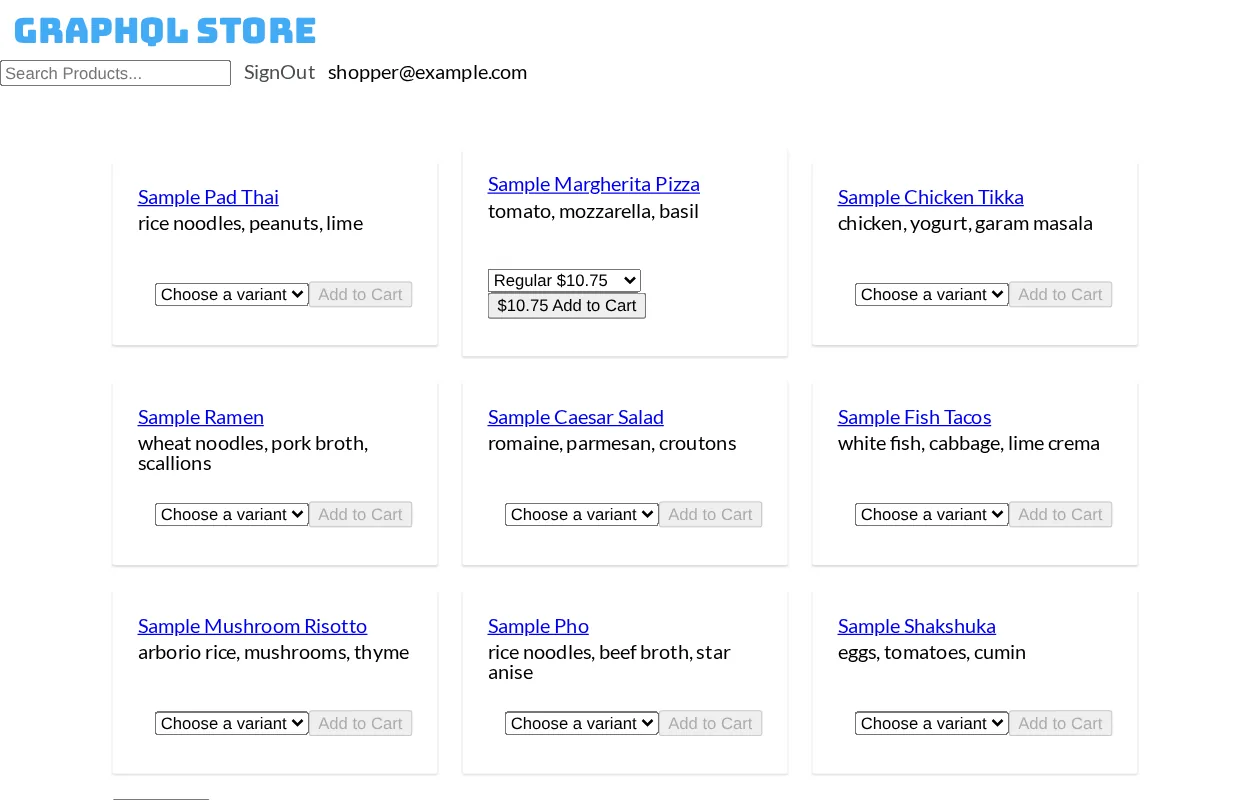
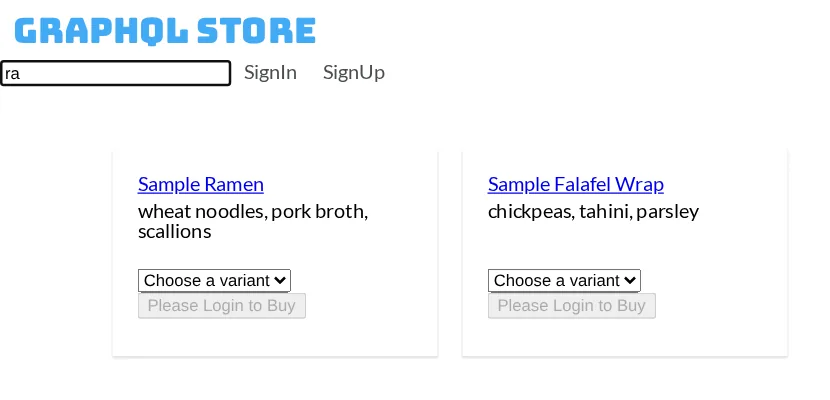
The home page lists products nine at a time, with Next Page and Prev Page buttons that move the query’s offset. The search box in the header filters by name as you type. Each card has a menu of variants with their prices. Signed out, its button reads “Please Login to Buy”. Signed in, it reads Add to Cart and becomes clickable once you pick a variant, though it isn’t wired to anything yet.
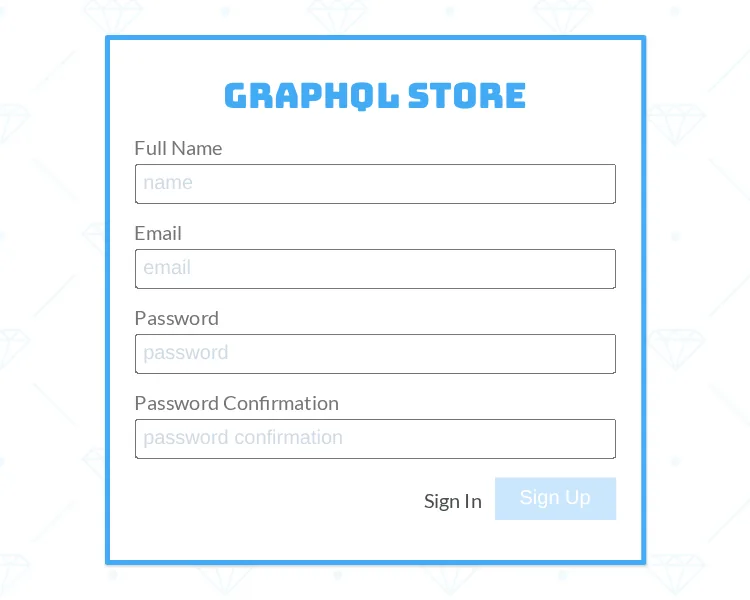
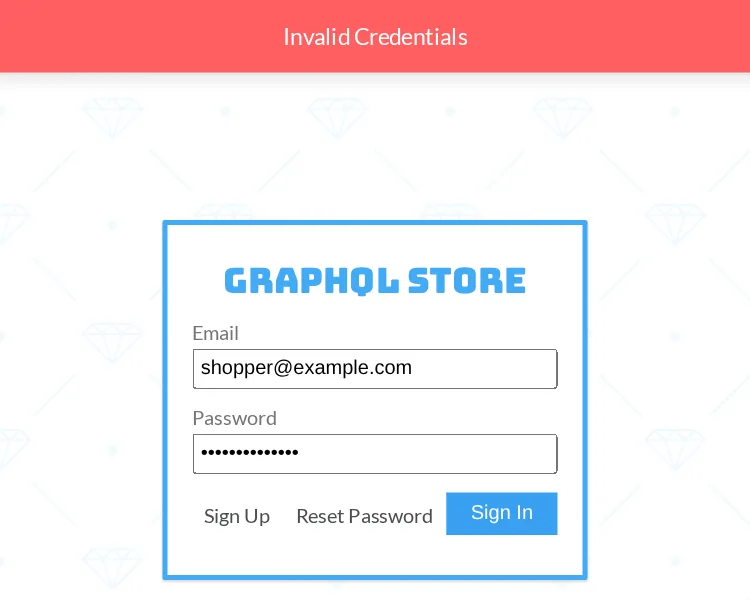
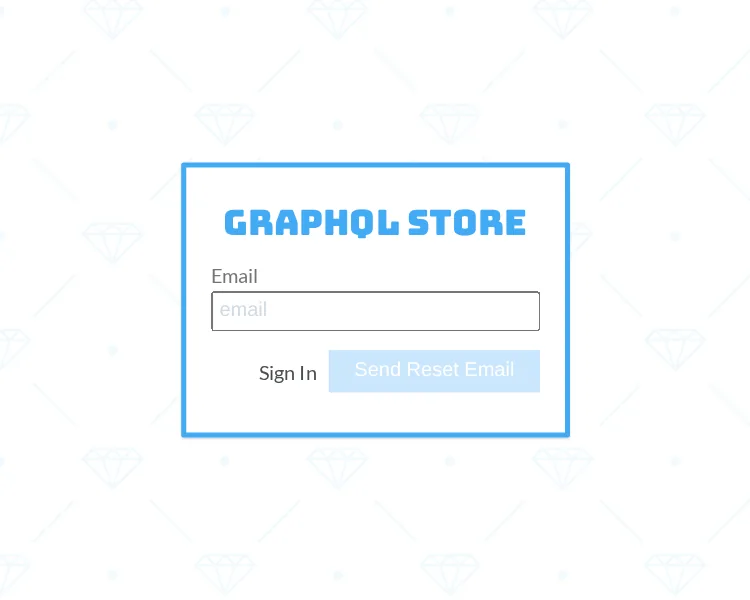
The rest of the client is accounts: sign up, sign in, sign out, a forgot-password form, and a reset page for the link in the email. Signing in returns devise_token_auth’s access-token, client and uid. The client keeps them in localStorage, and an Apollo link adds them as headers to every request. Each route checks the stored token with a validToken query, and a banner across the top shows success and error messages for five seconds.
A product page at /products/:id exists too, but it only prints the product’s name, description and image, with no styling yet.
The API
The server is Rails 5.1 in API mode on PostgreSQL, with GraphQL Ruby 1.7 serving one /graphql endpoint. Its types cover users, products, variants, carts and cart items. Every list query is a search_object resolver with filters for IDs, timestamps and fields like name, plus ordering and offset and limit. The storefront’s search box uses the name filter on products, which matches with ILIKE.
- Accounts. devise_token_auth on top of Devise, with mutations to register, sign in, sign out, update or delete your account, and reset a password. The reset email links back to the client’s
/reset-passwordpage. - Permissions. Roles come from rolify, and Pundit policies, checked in the resolvers and service objects, decide who can do what. Anyone can browse products, only admins can create, change or delete products and variants, and carts and cart items are open only to their owner or an admin.
- Carts. Each user gets an active cart, created on first use, and cart items point at a variant with a quantity.
- Soft deletes and images. Records are soft-deleted with paranoia, so types expose
deletedAt. Products and variants have Paperclip images stored on S3, uploaded through the API as base64 strings. - Sample data. A rake task creates 100 products named after Faker dishes, each with five variants and a random photo from Unsplash.

app/graphql/graphql_store_schema.rb in the server.The server also has a REST-style ProductsController whose actions build GraphQL query strings and run them through the same schema, added as an example of using GraphQL from a Rails controller.
How the client is built
The client is React 16.2 from Create React App 1.0, with Apollo Client 2 and react-apollo, React Router 4, styled-components 2 with styled-css-grid, react-final-form for the forms, and redux-zero to hold the search text. The list and detail queries share one GraphQL fragment for products. The API address, localhost:3000/graphql, is hardcoded.
The client still starts with Node 8 and Yarn 1, but the server is harder to bring back: besides PostgreSQL, its development config reads S3 settings from the environment.
Two months later, the demo server for the GraphQL talk at TulsaRB reused this server’s camelizing instrumenter.
The creation date shown here is the GitHub repository’s UTC creation date. The screenshots were captured by running the client locally from its source against a local stub of the server’s GraphQL schema, with made-up sample data, and the code card shows the server’s source.