boilerplate-es6-angular-webpack is a starter kit for AngularJS 1.5 apps written as ES6 classes and modules. Babel compiles them, webpack bundles them, and webpack-dev-server serves the app while you work. Its one example component, home, shows the layout it suggests: a folder per component, with a module file that imports a controller, a directive, a component and a service and registers them on one Angular module.
The boilerplate’s 13 commits are from April 8 to 17, 2016. On May 15, its final state was copied into a second repository, getting-started-with-angular-1.5-webpack, and commented line by line under the title “Getting Started With ES6 Angular 1.5 and Webpack”. Neither has changed since May 2016.
What’s in the kit
- ES6 throughout. Controllers, services and directives are ES6 classes, components are plain objects, and files import each other as modules. Babel 6 compiles them with its ES2015 preset.
- Minification-safe injection. Instead of Angular’s array syntax for naming dependencies, functions start with
'ngInject';and ng-annotate adds the names at build time. - Templates in the bundle. webpack treats
src/public/viewsas a module folder, so a route canimport templateUrl from 'home/home.html', and ngtemplate-loader puts the HTML in Angular’s template cache. - Routing with the 1.0 alpha of UI-Router, using hash URLs and falling back to
/. - Styles in Sass, compiled by node-sass and injected by style-loader.
- A production build.
npm run buildwrites./distwith a hashed, deduplicated and uglified bundle and its source map, and copies everything insrc/publicexcept the HTML.
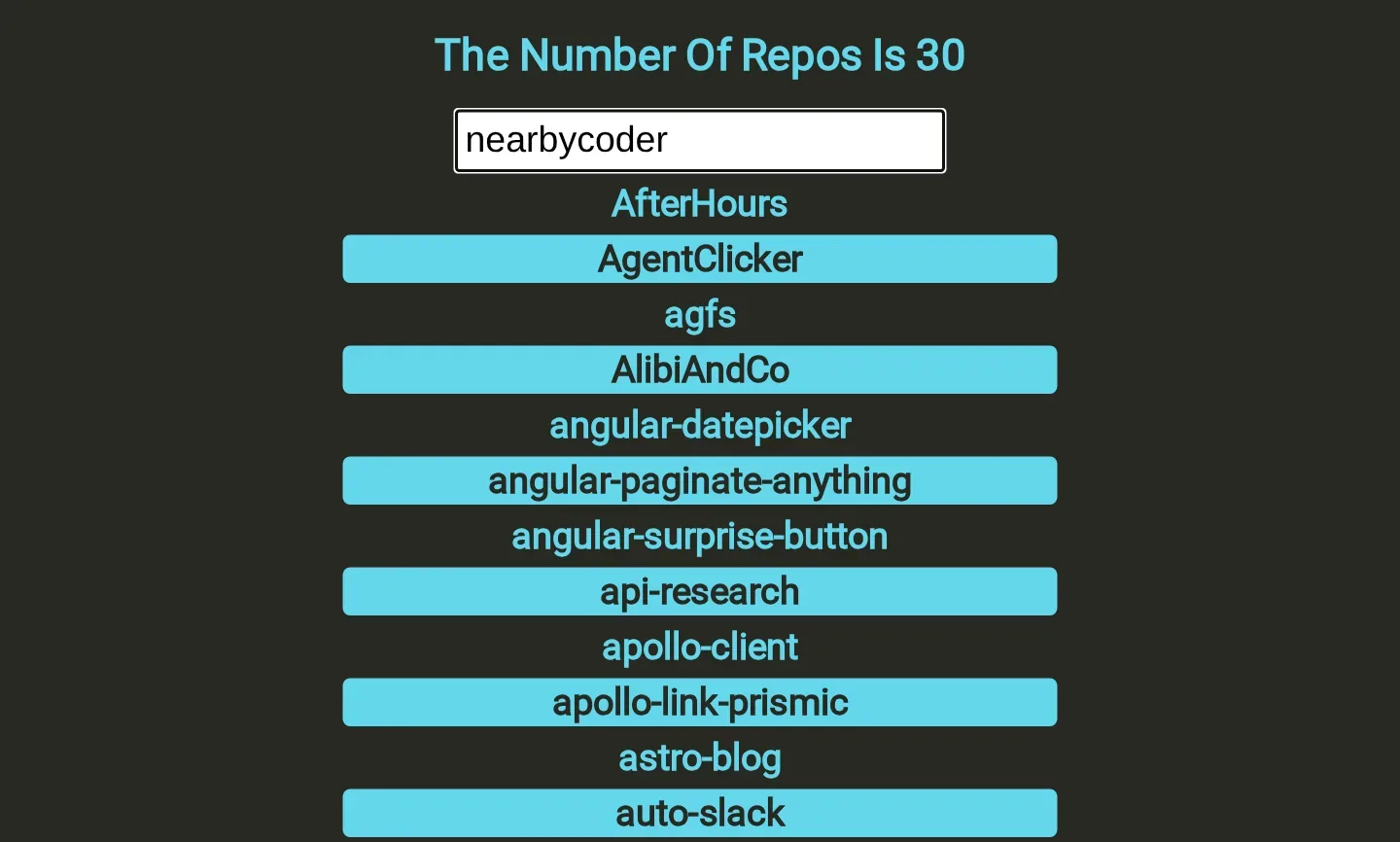
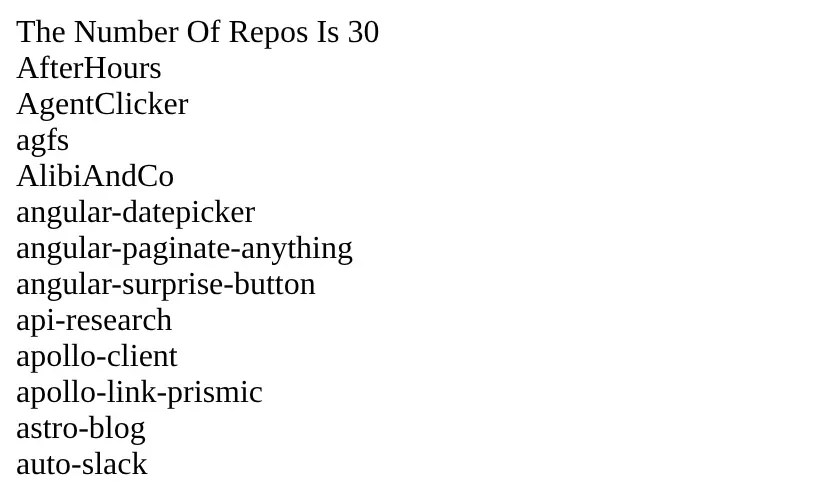
The home example asks a $resource service for the repositories of a GitHub user (hardcoded as nearbycoder) and lists their names. An es-counter component, bound one way to the list, shows how many there are once the request resolves, and an es-capitalize directive title-cases its text. Later commits fixed spelling, replaced a $scope.$watch in the counter with the resource’s promise, and moved the request out of $onInit (“Fix issue with controller not having $onInit function”).

The commented copy
getting-started-with-angular-1.5-webpack starts from the boilerplate’s last commit. One commit, “Added comments to all”, then annotated nearly every line: what 'ngInject' does, why templates are imported, and what each webpack loader and plugin is for. The same commit made the demo interactive. An es-enter directive runs an expression when you press Enter, so you type a GitHub username and load that user’s repositories, and a new stylesheet gives the page the dark theme shown at the top.
The counter went back to a $scope.$watch, because, as its comment says, the watch is needed to update the count after the request. Another comment notes that counting this way is “Probably not the best approach for larger github user repo lists as they are paginated.” The API’s first page holds 30 repositories, which is why both demos stop at 30.

Use
The boilerplate has 17 stars and 8 forks on GitHub. In January 2017, a developer building an Angular 1.x app from it reported that their router stopped working in builds without source maps. The reply was a pull request to their project, and they closed the issue as resolved.
Its sibling, boilerplate-es6-react-redux-webpack, came two days later with the same webpack setup for React and Redux.
The creation date shown here is the GitHub repository’s UTC creation date. The screenshots were captured by running both repositories locally on Node 6, with dependencies at the versions current when they were last committed (Angular 1.5.5, webpack 1.13, Babel 6 and node-sass 3), against the live GitHub API, and the code cards show real source files from the two repositories.