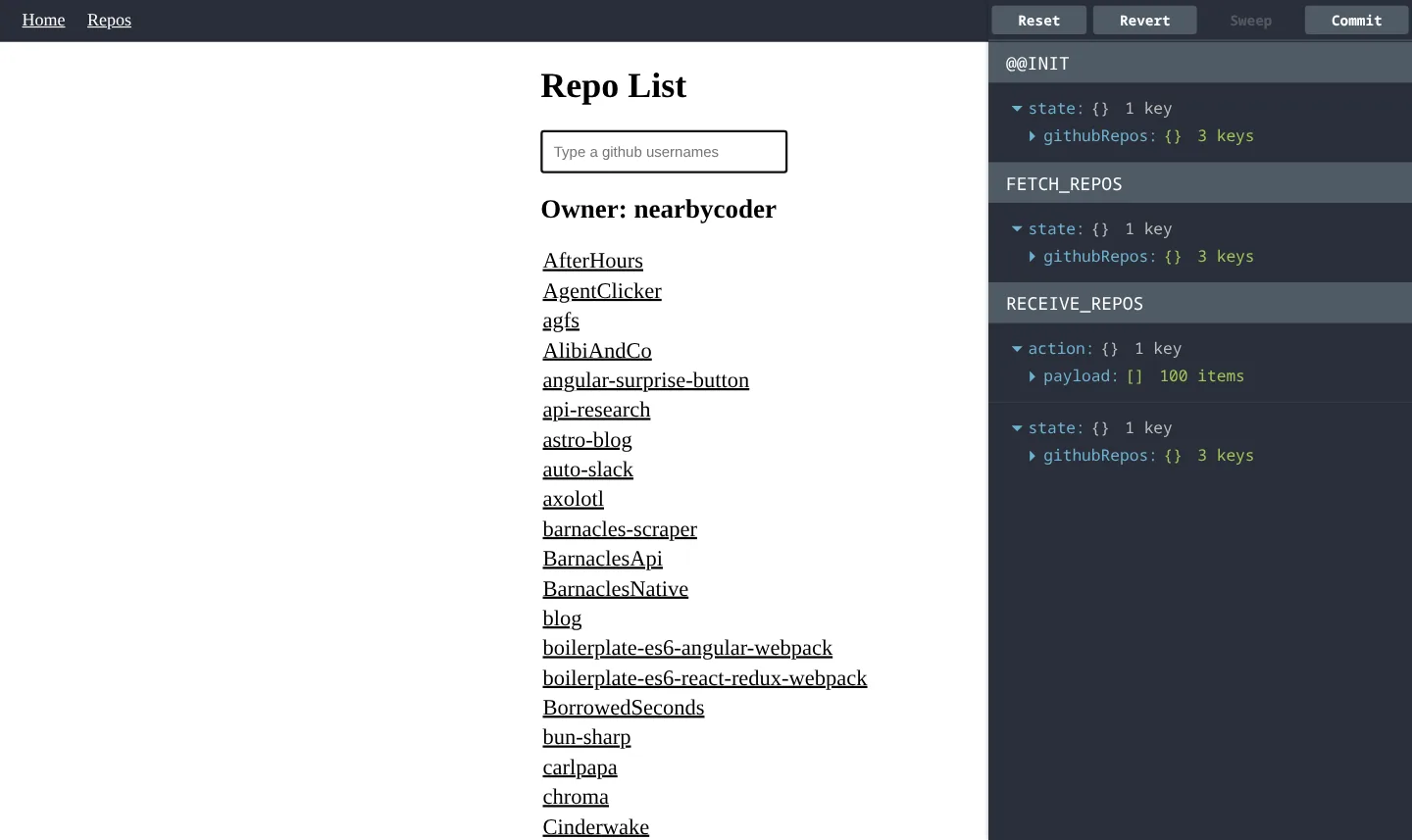
boilerplate-es6-react-redux-webpack is a starter kit for React apps written with ES6 classes and modules. It sets up Redux for state, React Router for routes, Babel for the newer syntax and webpack to bundle, with hot reloading and the Redux DevTools in development. It came two days after boilerplate-es6-angular-webpack and shares its webpack setup and most of its README.
The example app is there to be stripped out. As the README puts it, “This is more for knowing where the resources go.” The repository has four commits: three on April 10, 2016, and one in September 2016 that updated the dependencies (React 15.0 to 15.3) and, to “fix deprecations with react”, stopped spreading the action creators onto each list item. It hasn’t changed since.
How it’s laid out
src/appsplits the Redux pieces intoactions,constants,reducersandstore. Presentational components live incomponents, and the ones connected to the store incontainers.routes.jswraps every page in a layout with a header and footer, with Home at/and the repo list at/repos, using React Router 2 with browser history.fetchReposcomes from redux-resource’screateResourceAction, given a URL template,https://api.github.com/users/:username/repos?page=1&per_page=100, and three action types:FETCH_REPOS,RECEIVE_REPOSandERR_RECEIVE_REPOS. Its middleware is redux-thunk.- Type a username and press Enter to dispatch it. The reducer keeps only the repositories that aren’t forks, and on an error it sets a “User Not Found” warning.
- In development the store is wrapped with the Redux DevTools: a dock with a log monitor (Ctrl+H hides it, Ctrl+Q moves it), or the browser extension if it’s installed. Adding
?debug_session=<key>to the URL keeps a session across reloads. - Components hot reload through react-transform-hmr, and the store swaps in new reducers through webpack’s hot module replacement.
- Babel 6 runs the ES2015 and stage-0 presets, so components use class properties for
propTypesand the::bind operator. npm run buildsetsNODE_ENVto production, which leaves the DevTools out, and writes a deduplicated, uglified bundle to./dist.

Running it today
Installed with the versions from its last commit (React 15.3.1, Redux 3.6, React Router 2.8, redux-resource 1.1.0 and webpack 1.13) and run on Node 6, the project still compiles and serves. Looking up a user no longer works in a default browser, though. redux-resource 1.1.0 sends its request with XMLHttpRequest and rejects any response whose statusText isn’t exactly “OK”. The GitHub API now answers over HTTP/2, which has no status text, so a successful response goes to ERR_RECEIVE_REPOS, and the page says “User Not Found” for an account that exists.
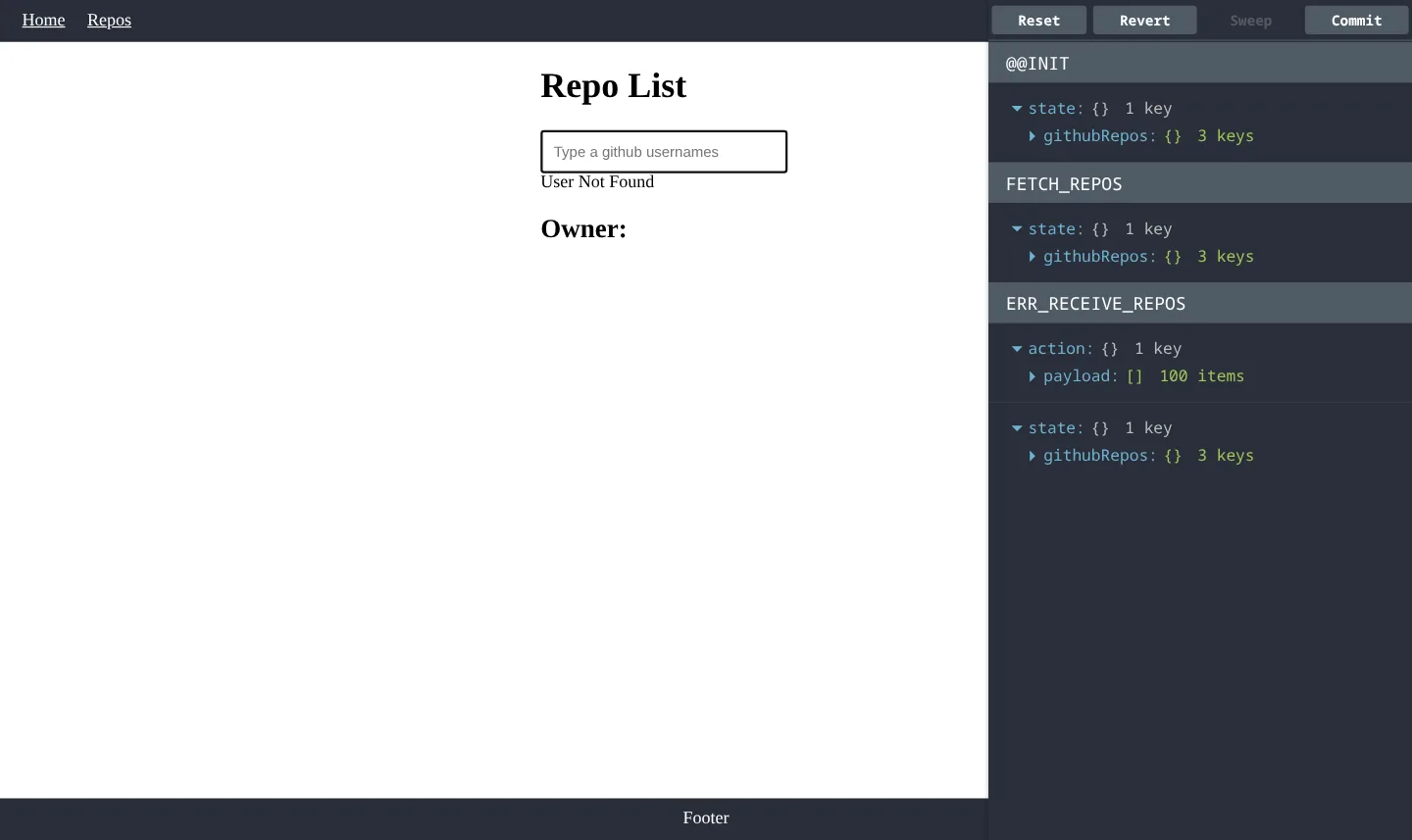
Over HTTP/1.1, GitHub still sends “200 OK”. With HTTP/2 turned off in the browser, the app works as written, which is how the screenshot at the top of this page was made. Nothing in the project or its dependencies was changed.
The creation date shown here is the GitHub repository’s UTC creation date. The screenshots were captured by running the project locally from its source on Node 6, with its 2016 dependencies, against the live GitHub API, and the code card shows a real source file from the repository.